Project QT gameplay: a puzzle board that feeds an RPG
Project QT belongs to a rare group of games: a match-3 puzzle that respects its RPG half. Nothing on the board happens in a vacuum — every combo you make feeds a real battle happening right after.
The match-3 core
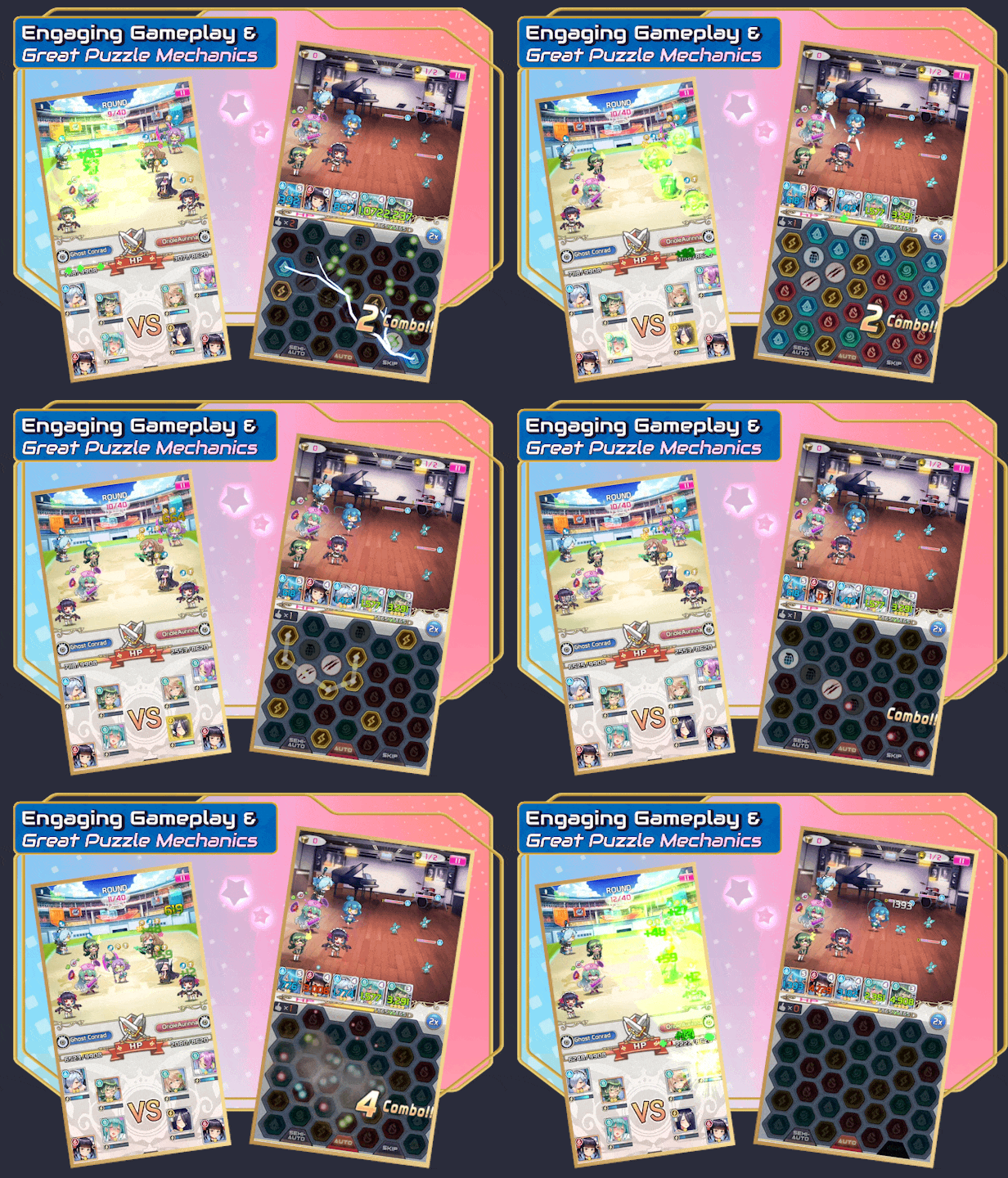
Every fight starts on a colorful board full of gems. Swap two adjacent gems to line up three or more of the same color; each cleared row charges your team's skills and chips away at enemy defenses. Some stages add shields that only crack when you match a specific color, others demand you clear a certain number of gems before the turn counter runs out. The rules stay simple, but stage design keeps inventing new wrinkles, which is why the puzzle part never goes stale.
Combat after the board
When the board phase ends, your girls take over. Battles are turn-based: your front line attacks, your supports heal and buff, and skills fire off in the order you chose. The mana you generated on the board decides how early and how often those skills trigger, so a strong opening match can decide the whole fight before the first punch is thrown.
Team building and synergy
Your roster is your real arsenal. Each girl has a role — some hit hard, some tank, some heal or strip enemy buffs — and matching the right roles to a stage makes a bigger difference than raw levels. Pay attention to the affinities of your girls against the monsters you face; a team that covers its weaknesses will clear stages the same level as a stacked team that ignores them.
Summons: growing the roster
New girls arrive through the summon system. Keys and gems pull from the pool of heroines and monster girls, and duplicates upgrade a girl's rarity, unlocking stronger passives and higher stat caps. Save your premium currency for summon events with boosted rates, and your pulls will go noticeably further.

Modes beyond the story
Story stages teach you the basics, but the game opens up quickly. Explore sends you on short expeditions for resources; the Tower is a climbing gauntlet that rewards a weekly reset; the Arena pits your team against other players' defenses; Invasion throws bigger, meaner bosses at you; Dungeons rotate daily with different rules; and Faction War is the endgame battleground where guilds fight for control. Each mode asks for a slightly different team, which keeps the whole roster useful.
| Mode | What it is | Why play it |
|---|---|---|
| Story | Main campaign stages | Core progress, first summons |
| Explore | Resource expeditions | Gold, items, girl shards |
| Tower | Endless climbing gauntlet | Weekly rewards, summon keys |
| Arena | PvP vs other players | Rank rewards, bragging rights |
| Invasion | Boss battles | Event currency, rare materials |
| Dungeons | Rotating daily challenges | Evolution materials |
| Faction War | Guild vs guild territory | Endgame gear and currency |
Events keep the meta moving
Limited-time events arrive every few weeks, usually with their own story, a boosted summon banner, and a reward track that hands out keys, evolution materials, and exclusive girls. Even if you only log in for the event, the daily missions alone are enough to fund steady progress over a season. The community calendar stays busy, so there is nearly always a reason to check in.
Project QT rewards both kinds of players: those who love the puzzle and those who live for the collection. The two halves feed each other, and the game is generous enough that neither side ever feels locked out. If you have not tried a puzzle RPG before, this is a friendly place to start — and if you have, the board will feel familiar but the battles will keep you honest.